

Cultural Responsiveness: Walking With You at Matone Counseling & Testing
At Matone Counseling & Testing, we believe healing begins with safety.
Not just physical safety but emotional safety. Cultural safety. Identity safety. The kind of safety that allows someone to exhale and say, “I don’t have to filter myself here.”
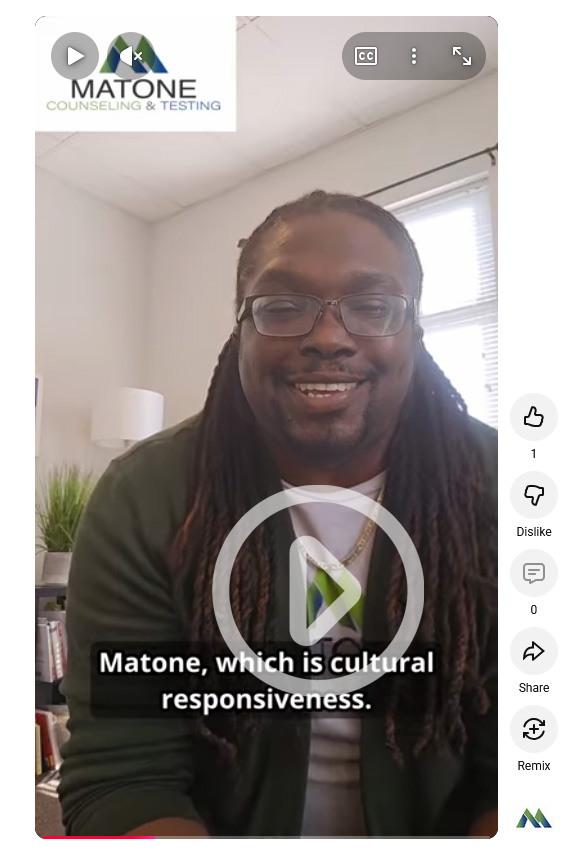
Recently, in a Matone Minutes segment, Michael Little, LMFTA, who works out of our South Charlotte office and also sees clients virtually, shared that cultural responsiveness in counseling is not about memorizing facts about different communities. It’s about humility. It’s about curiosity. It’s about recognizing that each client’s lived experience shaped by culture, race, faith, gender identity, sexual orientation, family systems, and personal history deserves respect and thoughtful understanding.
He emphasized that when a counselor actively seeks to understand a client’s cultural lens, it communicates something powerful: You matter here.
That message creates security.
Walking With Clients Through Trauma
In another powerful conversation, Matt Cyr, LCSWA, who practices at our Cotswold location, shared that creating safety means more than offering kind words. It means walking through trauma with clients, not rushing them past it.
Matt spoke about intentionally creating a space where members of the queer community, individuals in recovery, and teens (who often don’t feel their voices are protected) can feel seen and heard without fear of judgment.
He described therapy as walking alongside someone in their pain – not trying to “fix” them quickly, but honoring their story and building trust step by step.
When clients feel that their therapist is willing to sit with them in difficult spaces, shame begins to loosen. Stigma begins to shrink. Healing becomes possible.
Culture, Community, and Belonging
According to Mental Health America, culture plays a vital role in mental health. They note that LGBTQ+ individuals face higher risks for anxiety, depression, and suicidal ideation due to stigma, discrimination, and lack of affirming environments. They emphasize that culturally responsive, affirming care can significantly improve mental health outcomes and foster resilience within the queer community.
Affirming care is not a trend. It is a responsibility.
When someone from the queer community walks into a therapy office, safety is not assumed. It is built. It is communicated through inclusive language, thoughtful intake forms, steady presence, and a willingness to listen without defensiveness.
Creating that safety is ongoing work.
Safety as the Foundation of Healing
At Matone Counseling & Testing, safety is not a side note to therapy. It is the foundation.
It is present when:
- A teen realizes their feelings won’t be dismissed.
- A person in recovery feels understood instead of labeled.
- A client exploring their identity knows they won’t be shamed.
- Someone sharing trauma sees that their therapist is steady enough to stay.
Cultural responsiveness is not simply about awareness. It is about creating environments where clients experience emotional security.
Because when people feel safe, they tell the truth. When they tell the truth, healing begins. And when healing begins, resilience and hope can grow.
About the Author

Kim Matone, LCMHC, is a mental health counselor and co-founder of Matone Counseling & Testing. She works primarily with women and women’s issues, particularly perinatal mental health including postpartum depression, anxiety, and psychosis. Kim is also committed to helping families and individuals in long-term recovery and works collaboratively with clients to create a safe space for mental healthcare. She hosts the YouTube podcast Raindrops On Roses, where she has authentic discussions with other mental healthcare providers and community partners.