


Things to Say to Someone With Cancer: Sometimes the Answer May Lie in Saying Nothing at All
Cancer. It is a word that no one ever wants to hear. From family members to the patients themselves, a cancer diagnosis can bring on fear, confusion, new questions, and an awareness of mortality that may not have been there before. Suddenly, there may be appointments, treatments, decisions, and information coming from every direction. There may also be a lot of emotions that are difficult to put into words.
When someone we care about is facing cancer, it is natural to want to say the “right” thing. We may want to offer encouragement, reassurance, or find some words that will somehow make the situation easier. But sometimes the answer may not lie in saying anything at all. Sometimes what a person needs most is simply someone who is willing to sit with them in whatever they are experiencing.
Here are some ways you can support someone facing a cancer diagnosis, as well as their family and caregivers.
Make space for whatever they are feeling.
Many people with cancer feel the need to put on a brave face and toughen up. And understandably so. Cancer treatments can be extremely exhausting, both physically and emotionally, and getting through them can take a tremendous amount of strength. There may be family members who are depending on them, friends who are checking in, and medical professionals who are asking them to keep moving forward.
But being strong does not mean that someone has to be strong every minute of every day.
Letting someone with cancer know that they do not always have to have the brave face can be incredibly helpful. They do not have to reassure everyone else. They do not have to pretend that they are okay when they are not. Giving someone permission to have moments when they break down, feel angry, feel frightened, or simply do not know what they are feeling can provide a much needed sense of relief.
Nor does cancer have to define them.
This means asking them how they would like to be supported at any given moment. It is okay to ask, “What would you like today ?” This may be time alone, time together, or a day where we do not talk about cancer at all. Allow them moments to be the whole person they are.
The goal is not to take away their difficult feelings. It is to let them know they do not have to carry those feelings alone, or all of the time. Taking a moment away from cancer does not mean pretending it is not there.
Remember the caregivers.
The same thing can be true for the people caring for someone with cancer. Being a primary caregiver often requires putting on a good deal of armor. Caregivers may feel that they need to remain strong for the person they love, keep track of appointments and medications, communicate with doctors, manage practical responsibilities, and provide emotional support.
Caregivers need space, too.
Allowing caregivers to not have to put on a brave face and to express what they are feeling is extremely valuable. They may experience exhaustion, anger, sadness, fear, guilt, helplessness, or even moments of resentment. Having those feelings does not mean that they love the person they are caring for any less.
Give them room to talk without immediately reassuring them or telling them that everything will be okay. Sometimes they may simply need someone to acknowledge that this is hard.
Make room for the grief.
Elevate the person experiencing cancers voice, especially when it comes to treatment decisions.
Cancer treatment can quickly become a collaborative process involving doctors, nurses, specialists, family members, and caregivers. Having people involved and supportive can be incredibly important. At the same time, it is important to remember that the person experiencing the cancer is still the person whose life is being affected by these decisions.
Allow the person with cancer to elevate their voice in their treatment choices.
Family members may have strong opinions about what treatment should be pursued. They may have researched different options or heard stories from other people. Their desire to help is understandable. But there is a difference between supporting someone’s decision and making the decision for them.
The individual experiencing cancer maintains their autonomy. Their values, wishes, fears, priorities, and quality-of-life considerations matter. Sometimes the most supportive thing a family member can do is provide information, ask what the person wants, and then respect their decision.
Make room for grief and questions about mortality.
Many cancers today have high survival rates, and treatment continues to improve. But there are still cancers that do not have the outcome everyone hopes for.
Those questions may come up early, or they may come up much later. Someone may wonder, “Am I going to die?” They may worry about what will happen to their family. They may grieve the life they expected to have. They may become afraid of things they never thought much about before.
These conversations can be uncomfortable. Our instinct may be to reassure the person quickly: “You’re going to be fine,” or “Don’t think that way.” But shutting down those conversations does not necessarily make the fear disappear.
Instead, make room for whatever comes up.
If someone wants to talk about death, let them talk about death. If they want to talk about their fears, listen. If they are grieving something they may lose, allow that grief to exist. And if they do not want to talk about it, respect that, too.
Sometimes, there is nothing to say.
Perhaps one of the most important things we can offer someone with cancer is the willingness to simply be there.
We do not have to find the perfect words.
Sometimes the answer may lie in saying nothing at all.
Cancer can become a person’s entire world very quickly. One of the most meaningful things we can sometimes do is remind them that they are still a whole person. Cancer does not define them.
Sometimes, being willing to stay, listen, or just be there, for whatever the person is experiencing, is more than enough.
Article by: Crystal Manchin
About Christina Farber Crystal Manchin
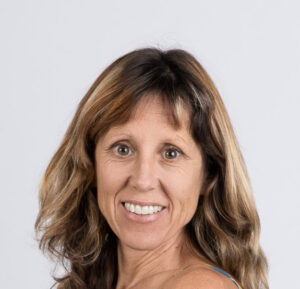
Crystal Manchin
Crystal is a graduate-level clinical intern, studying at Lenore-Rhyne University, where she is completing her master’s degree in Clinical Mental Health Counseling. She earned her Bachelor of Arts in Psychology from the University of North Carolina at Asheville. Her clinical training has provided her with experience supporting clients through a variety of concerns, and she is continuing to develop her skills as she prepares to begin her professional counseling career.
Crystal takes a person-centered approach to counseling and her clinical work draws from approaches including Cognitive Behavioral Therapy (CBT) and Dialectical Behavior Therapy (DBT) . Crystal brings a relational and attachment lens in to therapy, and she is particularly interested in helping clients develop greater self-understanding while strengthening their sense of self in relation to others. Crystal will travel with you on the journey of navigating life transitions, and work with you to develop practical tools for managing difficult emotions and challenges.
Outside of counseling, she enjoys reading about and visiting historical sites, stand-up paddleboarding, hiking with her dogs, and all things plant-related. She believes that the experiences and interests people bring to their lives outside of therapy are an important part of who they are, and she enjoys bringing that same curiosity and authenticity into her work with clients.
Additional Resources
Li, J., Luo, X., Cao, Q., Lin, Y., Xu, Y., & Li, Q. (2020). Communication needs of cancer patients and/or caregivers: A critical literature review. Journal of Oncology, 2020, Article 7432849. https://doi.org/10.1155/2020/7432849
Evans Webb, M., Murray, E., Younger, Z. W., Goodfellow, H., & Ross, J. (2021). The supportive care needs of cancer patients: A systematic review. Journal of Cancer Education, 36(5), 899–908. https://doi.org/10.1007/s13187-020-01941-9
National Cancer Institute. (n.d.). Communication in cancer care . https://www.cancer.gov/about-cancer/coping/adjusting-to-cancer/communication-pdq