


Healing, Empowerment, and Hope
Understanding Domestic Violence, Trauma Recovery, and Reclaiming Your Life
October marks Domestic Violence Awareness Month—a dedicated time to foster open conversations, break silence around intimate partner abuse, and emphasize that psychological healing, safety, and independence are fully attainable. Domestic abuse is rarely limited to physical conflict; it deeply impacts emotional stability, cognitive clarity, and a survivor’s fundamental sense of self.
Stories of Resilience: Raindrops on Roses Podcast

Listen to Raindrops On Roses Podcast
Connecting with personal stories of survival can be a powerful catalyst for healing. On Matone Counseling & Testing’s podcast, Raindrops on Roses, host Kim Matone, LCMHC, featured attorney Theresa E. Viera, founder of Modern Legal. During the episode, Theresa bravely shared her personal experience growing up as a child in a home affected by domestic violence.
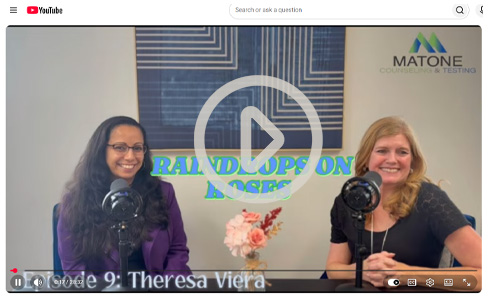
Witnessing abuse during childhood profoundly shapes one’s worldview and often instills a deep dedication to protecting vulnerable families. For Theresa, that personal history fueled her lifelong calling in family law, child custody advocacy, and legal representation in domestic violence and child abuse cases—ensuring that other children and families receive the protection, dignity, and legal guidance they deserve.
For expanded reading see related articles on Trauma:
How is EMDR Used to Treat Trauma
The Hidden Psychology: Cognitive Dissonance & Neurological Impact
Abusive relationships frequently operate in confusing cycles—alternating between verbal hostility, threats, and emotional volatile outbursts, followed by tearful apologies, excuses, and promises to change. This unpredictable pattern creates severe cognitive dissonance, a distressing mental conflict where a victim struggles to reconcile loving a partner with the reality that the partner is causing them harm. To ease this overwhelming mental friction, survivors often minimize the abuse, blame themselves, or doubt their own perception of reality.
Neurological Impacts of Ongoing Domestic AbuseHypervigilant Amygdala: Chronic fear keeps the brain’s fear center on high alert, leading to persistent anxiety, panic, and hyperarousal. Impaired Decision-Making: Prolonged stress shrinks the prefrontal cortex and hippocampus, making logical planning and information processing difficult. Erosion of Autonomy: Gaslighting and coercive control break down self-confidence, making survivors question their ability to live independently. |
Specialized Counseling for PTSD & Trauma at Matone Counseling & Testing
Healing from domestic violence requires addressing both emotional trauma and the neurological impacts of Post-Traumatic Stress Disorder (PTSD). At Matone Counseling & Testing, specialized, evidence-based therapy modalities empower survivors to process trauma, rebuild self-trust, and regain emotional independence:
| Therapeutic Modality | How It Works & Treats PTSD |
| EMDR (Eye Movement Desensitization & Reprocessing) |
Uses bilateral stimulation (side-to-side eye movements or rhythmic tapping) while recalling trauma in a safe space. Helps the brain reprocess ‘stuck’ traumatic memories, drastically reducing panic, triggers, and intrusive flashbacks. |
| IFS (Internal Family Systems) |
Views the mind as an ecosystem of distinct ‘parts.’ Helps clients connect with their core ‘Self’ to unburden wounded and protective parts (e.g., anxiety, hypervigilance, shame), restoring internal balance and self-trust. |
| TF-CBT (Trauma-Focused Cognitive Behavioral Therapy) |
Designed specifically for children, teens, and families. Combines cognitive-behavioral techniques with trauma-sensitive practices to process traumatic memories, address false self-blame, and build healthy coping skills.. |
Free Confidential Crisis Support & Emergency Services
No survivor has to navigate domestic violence alone. Free, confidential support is available 24/7 locally and nationally:
Immediate Crisis & Legal Contacts24/7 National Hotline: U.S. National Domestic Violence Hotline — Call 1-800-799-7233 or text ‘START’ to 88788 for round-the-clock safety planning. Greater Charlotte Hope Line (Safe Alliance): Call 980-771-4673 for 24/7 local crisis triage, domestic violence support, and parenting guidance. Emergency Shelters & Advocacy: Safe Alliance Survivor Resource Center, Baitul Hemayah Shelter (980-498-0492), and Mecklenburg County Community Support Services (704-336-3210). Legal & Court Support: Modern Legal (Family Law & Child Advocacy) & Safe Alliance’s Victim Assistance Court Program for courtroom guidance. |
Resources & References
1. Clinical & Therapeutic Services:
Matone Counseling & Testing: Specialized outpatient mental health care offering EMDR, Internal Family Systems (IFS), and Trauma-Focused CBT (TF-CBT) for trauma and PTSD recovery.
Raindrops on Roses Podcast: Hosted by Kim Matone, LCMHC, highlighting mental health insights, resilience stories, and community expert interviews.
2. Legal & Family Advocacy Sources:
Modern Legal: Founded by Theresa E. Viera, Managing Attorney. Practice areas focus on family law, child custody, child support, and legal protection in domestic violence and child abuse cases.
3. Crisis Support & Community Helplines:
National Domestic Violence Hotline: 1-800-799-7233 | 24/7 confidential crisis intervention and safety planning (thehotline.org).
Safe Alliance (Charlotte, NC): Greater Charlotte Hope Line: 980-771-4673 | Emergency Shelter, Victim Assistance Court Program, and Survivor Resource Center.
Mecklenburg County Community Support Services: 704-336-3210 | Prevention, intervention, and community-based victim advocacy.
Baitul Hemayah Domestic Violence Shelter: 24/7 Crisis Line: 980-498-0492 | Text Support: 704-764-1773.
DomesticShelters.org: Searchable database of local shelters, mobile safety tools, and educational guides.
4. Psychological Literature & Research:
Psychology Today: ‘Maybe It Isn’t That Bad’: The Psychology of Doubting Abuse — Analysis of verbal abuse cycles, cognitive dissonance, emotional gaslighting, and the neurological impacts of chronic stress on the amygdala and prefrontal cortex.
Article by: Kim Matone
About Kim Matone, LCMHC

Kimberly Matone, LCMHC
Kim Matone, LCMHC, is a mental health counselor and co-founder of Matone Counseling & Testing. She works primarily with women and women’s issues, particularly perinatal mental health including postpartum depression, anxiety, and psychosis. Kim is also committed to helping families and individuals in long-term recovery and works collaboratively with clients to create a safe space for mental healthcare. She hosts the YouTube podcast Raindrops On Roses, where she has authentic discussions with other mental healthcare providers and community partners.